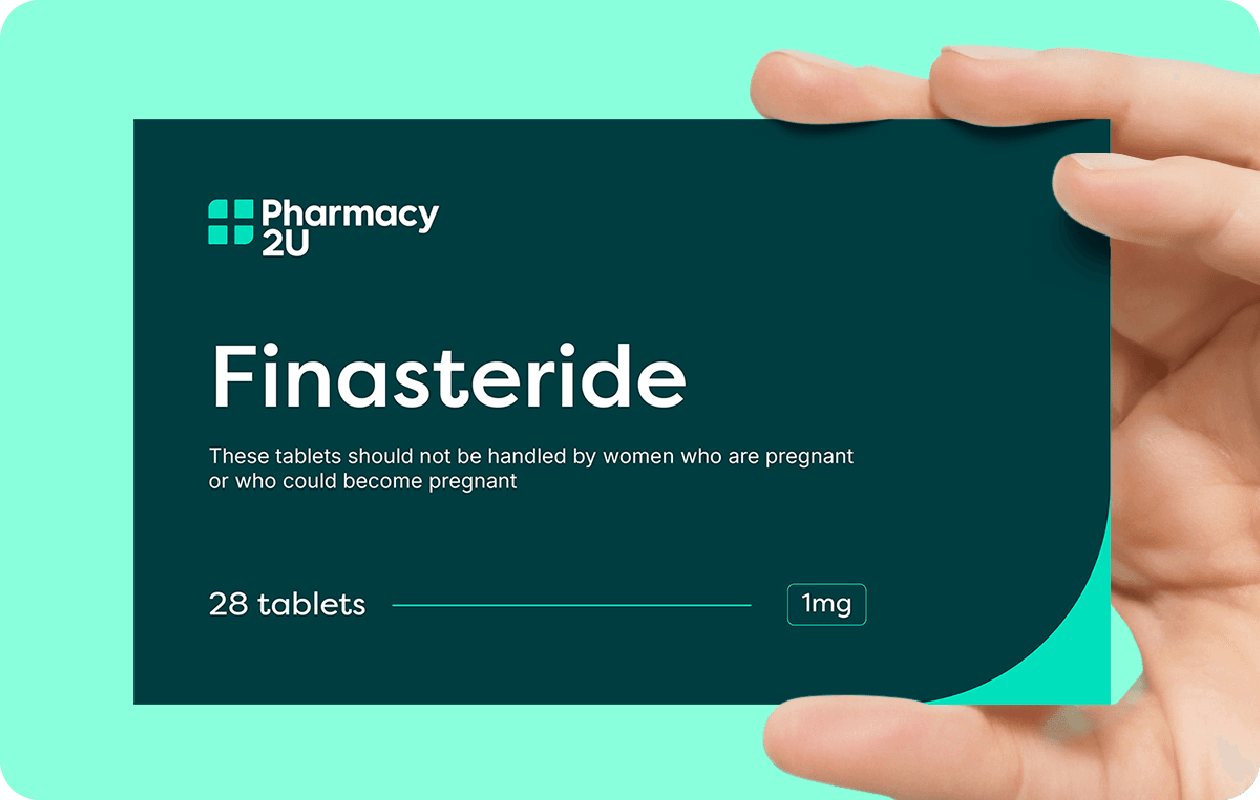
Finasteride hair loss treatment
Finasteride is a daily tablet for male pattern hair loss that helps reduce DHT, the hormone linked to hair loss, to slow further loss and support regrowth for some people.
From £14.00† with code: WELCOME20
Changes may be noticeable in 3 to 6 months*
Unlimited 1-to-1 clinical support**
Pay in a way that suits you
What to expect on your hair-loss journey

Months 1 to 3: Getting started

Months 3 to 6: Early progress

Months 6 to 12: Ongoing results
Results vary from person to person. Treatment is subjection to clinical assessment. Continue treatment as advised to give it the best chance of success. You can pause or cancel anytime.
Hair-loss support backed by science
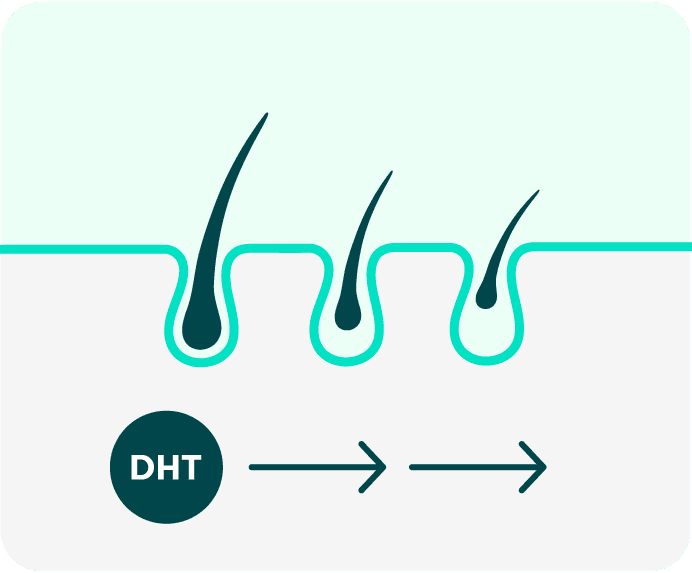
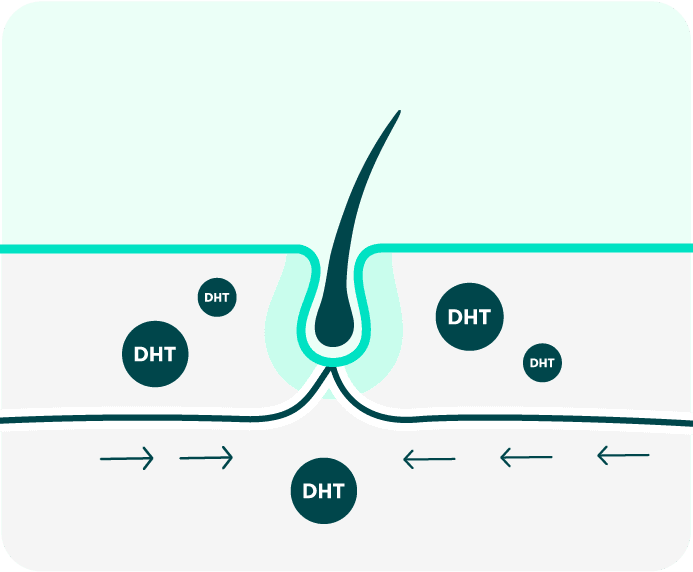
Why does male-pattern hair loss happen?
DHT can gradually shrink hair follicles, leading to thinning hair and hair loss.
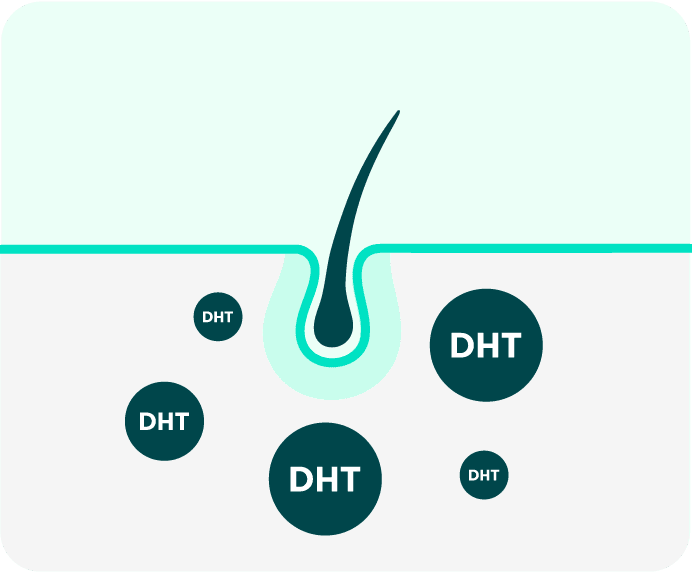
How finasteride tablets work
Finasteride lowers scalp DHT levels to help prevent further hair loss and support hair regrowth.
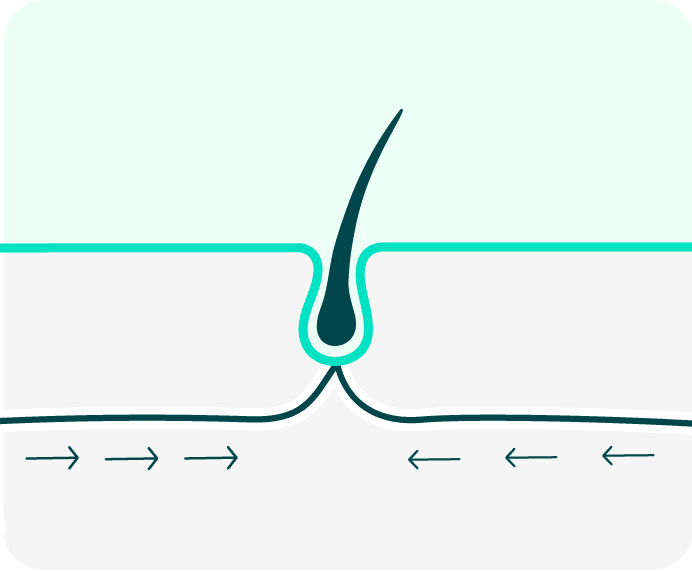
How topical minoxidil works
Topical minoxidil may support hair growth, but continued use is usually needed to maintain results.
Using the treatments together
94.1%^ of participants improved with oral finasteride 1mg & topical 5% minoxidil in a 12-month study.
Explore Finasteride tablets plans & pricing
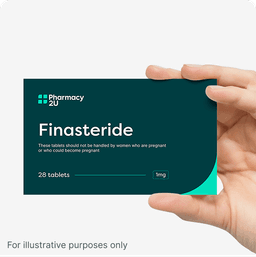
Finasteride 1mg daily tablets

| 1 month supply | £17.50 |
| 3 month supply | £44.99 |
| 6 month supply | £79.99 |
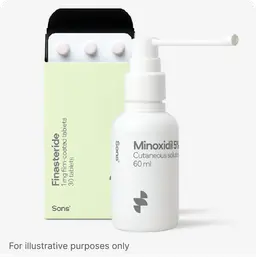
Dual Action: Sons finasteride tablets & Sons 5% minoxidil spray
| 3 month supply | £106.00 |
| 6 month supply | £189.00 |
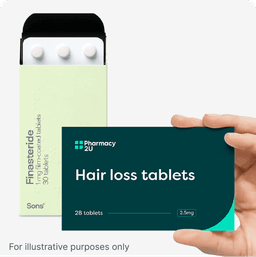
Dual Action: Combined hair-loss tablets
| 3 month supply | £106.00 |
| 6 month supply | £189.00 |
Important safety information: Finasteride can affect mood and mental health in some people. If you experience depression, persistent low mood, anxiety or thoughts of self-harm, stop taking finasteride and seek medical advice immediately. Finasteride may also cause sexual side effects, including reduced sex drive, erectile dysfunction or ejaculation problems. If you or someone else is in immediate danger, call 999 or go to A&E. Please read the Patient Information Leaflet and Patient Alert Card before starting treatment. Daily hair-loss tablets are prescribed off-label for hair loss and may cause changes in heart rate, blood pressure, fluid retention, or increased hair growth elsewhere on the body. If you develop chest pain, dizziness, fainting, a rapid heartbeat, or swelling, seek medical advice immediately. Please read the Patient Information Leaflet before starting treatment.
What our patients say


Rated excellent with 400,000+ reviews as of October 2023
Worry free service
This service has taken all the worry out of ordering repeat perscriptions. They remind you when perscriptions are due & they are posted & within a couple of days they are there on your door mat. Exemplary service. Thank you.
Hester Pendino

Great service
Great service. With good liaison with my GP. And order always efficiently delivered. So much easier than queueing at the local chemist. I started using Pharmacy2U during the pandemic and no turning back.
Hilary Simpson
The help line staff were excellent
The help line staff were excellent, they understood my issue straightaway, told me they would need to speak to a line manager and would get back to me. The same person got back to me later in the day with an answer, issue resolved
Linda Lauren

Great user friendly service
This is a very easy service to use.
I order my medication online from the drs it goes straight through to Pharmacy2U they confirm they have received it and it is sent out for delivery. With emails keeping me informed of its status all along the way.Neil Etheridge
I get reminders when I need to order
I get reminders when I need to order. It is easy to order and I get updates to let me know how my order is progressing. Within a very short time it is put out for delivery. It is then up to Royal Mail to post it through my letterbox.
Janet Tittensor
Losing the monthly stress
Being able to request my prescription from the doctors and knowing that the items I require will be delivered to my door without delay. Originally I would go to the pharmacy after a 5 day wait to find that my prescription was not ready, so thank you for making my life easier.
Pat Cruttenden
Excellent service
Excellent service. Timely as ever. Prompted by P2U to re-order. From sending order to receipt was 7 days. Excellent as it includes GP’s approval sign off.
Ceijag
The clinicians behind the care

“We know that privacy matters, which is why every order is delivered discreetly to your address.”Dr Kieran Seyan
GMC Number: 6104204
“Every journey with Online Doctor is unique, which is why our clinical advice & support is tailored to you”Dr Mitra Dutt
GMC Number: 6077868
“When you're ready to take the next step, we're here to help, with fast delivery so your journey to better health can begin.”Dr Gigi Taguri
GMC Number: 6129350
“You're never on your own. Our UK clinical team is on hand to support you every step of the way”Dr Neel Patel
GMC Number: 7085151
Expert clinical advice to support your hair loss journey
Frequently asked questions about Finasteride & hair loss
Finasteride is an oral medication that belongs to the class of 5-alpha-reductase inhibitors and is primarily prescribed for the treatment of male pattern baldness, also known as androgenetic alopecia. At higher dosages, it can also serve as a treatment for an enlarged prostate. As a generic medication, finasteride is often more cost-effective compared to its branded counterparts. Notable brands incorporating finasteride include Propecia, a brand of finasteride used to treat male pattern hair loss.
Finasteride is used to treat male pattern baldness, a condition where the hairline recedes, and hair gradually thins at the crown and temples.
Finasteride functions by reducing the levels of DHT (dihydrotestosterone) in the body, inhibiting the conversion of testosterone into this male hormone. Elevated DHT levels or heightened sensitivity of hair follicles to DHT can lead to hair loss, as the follicles shrink, impeding regrowth, specifically on the scalp.
Finasteride is intended for use exclusively by men aged 18 years and older. It is not recommended for women and children, and certain conditions may make its use unsafe.
have a history of allergic reactions to any medications, including finasteride
experience bladder or liver problems
Since finasteride can be absorbed through the skin, contact with crushed or broken tablets may pose a risk to the health of an unborn baby. It can also be present in semen, necessitating condom use if your partner is pregnant.
Finasteride should not be taken by women. Do not touch crushed or broken Finasteride tablets if you are a woman who is pregnant or planning to become pregnant (whole tablets are coated to stop contact with the medicine during normal use). This is because this medicine may affect the baby’s sex organs.
While using finasteride, you can safely take paracetamol for pain relief. If you experience reduced sex drive or erectile dysfunction and are considering Viagra as a solution, there are currently no known clinically significant interactions.
While the NHS have said it is generally suitable for many people to take finasteride for a long time after assessment, recent MHRA guidance has highlighted that possible side effects can include:
Depression
Urgent action for thoughts of self-harm
Suicidal ideation
Sexual dysfunction (which may contribute to mood disorders, though sexual dysfunction has also been reported without mood alterations)
Contact your healthcare provider if they experience sexual dysfunction, suicidal thoughts or depression.
Speak to your healthcare provider before starting finasteride to make sure it’s a suitable and safe treatment for you. You will be asked if you have a history of depression or suicidal ideation. It is important to read the Patient Information Leaflet before starting treatment.
When administered as a tablet, finasteride is quickly absorbed into the bloodstream, commencing the blockade of DHT production. Visible changes in hair loss may take several months, with noticeable results may be seen after around 3 to 4 months.
While generally considered safe for treating hair loss, finasteride, like any medication, may cause occasional side effects.
If you experience depressive episodes or suicidal thoughts while using finasteride for male pattern hair loss, it is advisable to stop using the product immediately. Notify a healthcare professional about your symptoms for appropriate guidance and assistance.
Uncommon side effects may include:
reduced sex drive
erectile dysfunction (ED)
abnormal ejaculation
feelings of depression
Rare side effects can include:
tender or swollen breasts and nipples
nipple discharge
breast or underarm lumps
testicular pain
blood in semen
anxiety
palpitations
bloating of the face, hands, and/or feet
altered liver enzymes
persistent reduced sex drive or ED post-treatment cessation
male infertility or semen-related issues
Any changes in the chest wall, such as lumps, pain, or nipple discharge, should be promptly reported to a doctor, as they could signify serious issues, potentially including cancer.
If you have swelling of your lips or tongue, breathing difficulties, rashes, or difficulty swallowing, call 999 straight away as you may be having a severe allergic reaction.
Always read the Patient Information Leaflet for finasteride before taking it.
Clinical studies have shown that finasteride has been effective in either maintaining or improving hair levels over 5 years for 90% of men (compared to 75% visible hair loss on placebo). However, finasteride will not work for men with complete hair loss or for women.
Yes, finasteride and minoxidil can be used together. Combining them can help tackle hair loss from multiple angles because they work in different ways. Finasteride helps reduce levels of DHT, the hormone linked to male pattern hair loss, while minoxidil helps stimulate hair growth and support existing hair follicles.
Using both treatments together may improve results compared with using either treatment alone. In one study, 94% of men who used finasteride and minoxidil together saw improvements in their hair loss, compared with 80.5% using finasteride alone and 59% using minoxidil alone. Results can vary and it can take several months of consistent use before improvements become noticeable.
Some people may be advised to use both treatments, but you should only do this if a clinician or pharmacist confirms it is suitable for you. Many males with androgenetic alopecia use finasteride and minoxidil as a combination to treat the underlying cause of their hair loss and stimulate blood flow to affected areas.
You should always carefully read the patient information leaflet for both medicines and if your doctor or GP has prescribed finasteride tablets, we recommend checking with them to ensure you're suitable to use finasteride and minoxidil in combination to treat your hair loss.
Finasteride is available as a once-daily tablet containing 1mg of the active ingredient.
Finasteride may help promote regrowth in some people where follicles remain active.
A study showed that taking 5mg of finasteride a day to treat benign prostatic hyperplasia (BPH) led to a 15-25% increase in testosterone levels. However, this is five times the dose used to treat male pattern hair loss. Available evidence has not shown finasteride to lower testosterone levels.
Erectile dysfunction is listed as an uncommon possible side effect of finasteride. It may affect up to 1 in 100 people.
Finasteride 1mg is prescribed to men with androgenetic alopecia (male pattern baldness) to help reduce hair loss and promote hair regrowth. Take as directed by your prescriber, ideally at the same time each day. It should be swallowed whole, without breaking or crushing the tablet.
Finasteride 1mg is the only dosage available for treating male pattern baldness. Propecia, the brand name for finasteride, is specifically used to address hair loss in men and also comes in a 1mg dose.
You should only take the dosage prescribed to you by your GP or clinician. Don’t stop the treatment unless they advise you to, as hair loss often resumes once the medication has stopped.
Finasteride results after 6 months:
This is when you might be able to see visible results from reduced hair fall. This could appear as if your hairline has stopped receding or hair has stopped falling from the crown area. You may also notice signs of hair regrowth, such as a growing hairline or hair that appears thicker and stronger.
Finasteride results after 1 year:
At the one-year mark, you may see noticeable results from finasteride, particularly in hair regrowth. This may include improved hair regrowth in areas like the hairline and crown. This improvement happens because finasteride helps extend the anagen (growth) phase of your hair cycle.
Because everyone's hair grows at different rates, you may not have noticed any regrowth but may have experienced a slower rate of shedding and thinning after 1 year.
Finasteride results after 2 years:
After 2 years, you may start to see an improvement in hair density. This can result in less visible scalp and thicker, healthier-looking strands.
Continuous use of finasteride is required to maintain hair regrowth.
It doesn’t matter whether you take your finasteride tablet in the morning, afternoon, or evening as long as you remember to take it at the same time every day.
If you forget to take your finasteride tablet within 6 hours of your usual time, it's okay to take it. If it is any longer than 6 hours, skip this dose and take your next dose at the usual time.
You must avoid taking more than your prescribed dosage. Setting an alarm can help you remember to take your dosage at the same time every day.
Finasteride can be taken with or without food and should be swallowed whole without breaking or crushing the tablet.
Reading your Patient Information Leaflet is the best way to learn how to correctly take your finasteride tablets.
Topical finasteride is not licensed in the UK for treating hair loss. We do not offer it through this service. Speak to a clinician if you have questions about unlicensed or off-label treatments.
Both topical and oral finasteride help by reducing the amount of dihydrotestosterone (DHT) that your body produces.
High levels of DHT are known to contribute to hair loss in men with androgenetic alopecia. By lowering DHT levels, finasteride can help to extend the growth phase of your hair cycle and stop the hair follicles from shrinking. This can lead to slower hair loss and visible hair regrowth.
Oral finasteride is released into your bloodstream in order to reduce DHT levels, whereas topical finasteride works locally to reduce DHT levels directly on the hair follicles.
No. Finasteride is not available on the NHS to treat male pattern baldness. It is only available by private prescription, which means you will have to pay the full cost of the treatment yourself.
Finasteride may also be prescribed for male pattern baldness as Propecia. This is the brand version of finasteride; therefore, it tends to cost more than the generic version.
*Data sourced from: Recent Advances in Drug Development for Hair Loss (Kim et al. 2025). It may take around 3 to 6 months of daily treatment before an effect on hair loss becomes apparent. Results vary, and continued treatment is generally needed to maintain any benefit. Hair regrowth varies by individual, and treatments carry risks. All treatment options are subject to clinician advice, suitability and tolerability. Always read the Patient Information Leaflet before taking any medication and follow the advice given by your clinician. A clinician will assess your medical history, current medicines, treatment goals, and overall suitability. Treatment is not guaranteed. Side effects and risks vary by medicine.
**There may be occasions where prescribing or delivery takes a little longer. This can happen if your medical history requires further clinical review before we can confirm and dispatch your treatment. There are also some instances where it may take longer to get a response from one of our clinicians.
^Dual action: '94.1% of participants improved with oral finasteride 1mg & topical 5% minoxidil in a 12-month study.' (Hu et al., Dermatol Ther 2015).
† New patients to the Pharmacy2U Online Doctor hair-loss service only. Code is valid until midnight on 31/12/2026. Orders must be made through the Online Doctor service. Orders will be despatched upon doctor’s approval. This offer is subject to availability and may be withdrawn at any time without prior notice. For full terms and conditions and exclusions please visit our website at pharmacy2u.co.uk/about/terms-and-conditions.
These medicines are subject to additional monitoring. You can help identify new safety information by reporting suspected side effects through the MHRA Yellow Card Scheme.