Lymecycline and Azelaic Acid gel

A combination that kills acne-causing bacteria while gently unblocking pores and calming inflammation. It can be an effective option if you have more sensitive skin.
A prescription-only treatment for mild to moderate acne
Oral antibiotic reduces acne-causing bacteria
Daily gel gently exfoliates to clear pores
What are Lymecycline and azelaic acid gel?
Lymecycline is an oral antibiotic that reduces acne-causing bacteria and inflammation.
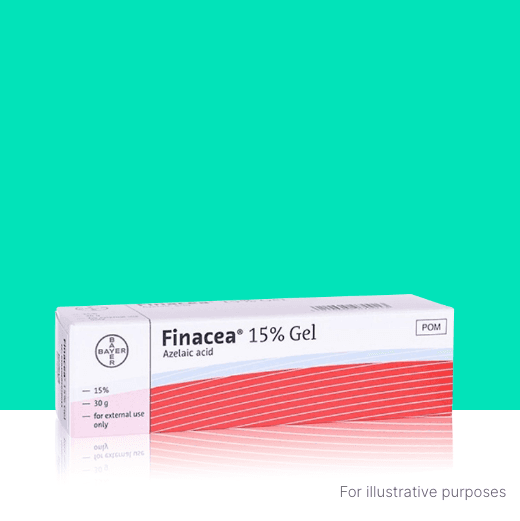
Azelaic acid gel (also branded as Finacea) is a gentle chemical exfoliant that breaks down blockages in pores and is also antibacterial.
Used together as a combination, lymecycline and azelaic acid gel (or lymecycline and Finacea) can be effective in clearing existing spots and preventing new ones. Complete an acne assessment to advise you on the right acne combination for your skin.
How do I take Lymecycline and apply Azelaic Acid gel?
Take one daily lymecycline tablet, ideally in the morning. Sit or stand while swallowing it, with plenty of water. Avoid lying down for at least 30 minutes so it’s less likely to irritate your stomach.
How to apply azelaic acid gel:
Wash your skin with a mild, non‑foaming face wash and pat dry.
Apply a pea sized amount (0.5g) in a thin layer over the affected areas twice daily.
Let it absorb into your skin before you use moisturiser (or put on make‑up).
Wash your hands.
Use daily for smoother skin, reduced redness and fewer breakouts. If the gel stings or tingles at first, switch to just the evening application for about a week.
Once your skin feels comfortable (no lasting redness, burning or peeling), add the morning dose so you’re back to the usual twice‑daily schedule. If irritation comes back when you introduce the second application, go back to once daily or take a short break. You could check with your doctor or clinician before increasing it to twice daily again.
How do lymecycline and azelaic acid gel work?
Lymecycline reduces the amount of acne-causing bacteria on your skin and calms inflammation.
To help shrink spots and improve skin tone by fading lingering dark marks from acne, azelaic acid gel has a dual action:
Works to exfoliate dead skin and trapped sebum (oil) inside pores.
It’s antibacterial, lowering bacteria levels and calming inflammation.
Combining the two increases the chance of getting smoother, less inflamed skin by tackling different acne triggers at the same time.
Is this combination acne treatment effective?
It usually takes about 6 weeks before oral antibiotics like lymecycline show noticeable improvement.
Are there any possible side effects from lymecycline or azelaic acid gel?
Lymecycline may make skin more sensitive to sunlight, so follow a good sun protection routine. Apply daily sun block (non oily, fragrance-free) and keep out of the sun when it’s most intense. You should also avoid sun beds.
Other possible side effects include nausea, dizziness, upset stomach or diarrhoea. Always let your doctor or clinician know if you get severe or persistent symptoms.
Typical azelaic acid gel side effects are mild itching, tingling or dryness where you apply it. These usually ease as your skin adapts. If you keep getting irritation, only apply the gel once a day or stop using it for a day to give your skin a break.
Severe reactions are rare. If you notice a widespread rash or swelling, stop using the gel and seek medical advice. Overall, azelaic acid gel side effects are usually mild and it doesn’t cause sensitivity to sunlight like some other topical acne treatments.
Full details on use and safety are in the lymecycline and azelaic acid patient information leaflets.
Acne treatments
 More info
Lymecycline and Azelaic Acid gel
408mg/15%12 weeks supply - £65.00
 More info
Lymecycline and Benzoyl Peroxide gel
408mg/5%12 weeks supply - £70.00
 More info
Lymecycline and Epiduo gel
408mg/0.1%/2.5%12 weeks supply - £70.00
 More info
Lymecycline and Adapalene gel
100mg/0.1%/2,5%12 weeks supply - £65.00
 More info
Doxycycline and Adapalene gel
100mg/0.1%84 capsules & 45g gel - £65.00
 More info
Doxycycline and Benzoyl Peroxide gel
100mg/5%84 capsules & 60g gel - £55.00
 More info
Doxycycline and Azelaic Acid gel
100mg/15%84 capsules & 60g gel - £55.00
 More info
Doxycycline and Epiduo gel
100mg/0.1%/2,5%84 capsules & 60g gel - £75.00
 More info
Co-cyprindiol and Epiduo gel
2000/35mcg/3+1%63 tablets & 60g gel - £75.00
 More info
Co cyprindiol and Benzoyl Peroxide gel
408mg/0.1%/2.5%63 tablets & 60g gel - £55.00
 More info
Co cyprindiol & Duac gel
2000/35mcg/3+1%63 tablets & 60g gel - £80.00
 More info
Co-cyrindiol and Adapalene gel
2000/35mcg 0.1%63 tablets & 45g gel - £65.00
 More info
Co-cyrindiol and Azelaic acid
2000/35mcg/15%63 tablets & 60g gel - £65.00
 More info
Benzoyl Peroxide gel
5%60g gel - £22.00
 More info
Azelaic Acid gel
15%60g - £25.00
 More info
Adapalene gel
0.10%Single pack - £35.00
 More info
Duac (Benzoyl Peroxide + Clindamycin) once daily gel
60g
Double pack - £55.00 More info
EpiDuo (Adapalene + Benzoyl Peroxide) once daily gel
60g12 weeks supply - £39.99
Meet our expert clinical team
Introducing the expert clinical team behind our range of healthcare services who uphold the highest clinical standards across everything we do.
Frequently asked questions
Lymecycline or azelaic acid gel are not recommended treatments if you’re pregnant, breastfeeding or trying for a baby. Ask your doctor or our clinicians about safer alternatives.
Lymecycline
Lymecycline can interact with other medicines you’re taking at the same time, making it less effective or more potent. These include other antibiotics and:
Indigestion remedies (antacids)
Warfarin, a medicine that helps prevent blood clots
Medicines containing aluminium, bismuth, calcium, iron, kaolin, magnesium or zinc
Quinapril, a medication for high blood pressure or heart failure
Acne medicines like isotretinoin that contain vitamin A
Tablets like furosemide that make you urinate more (diuretics)
Epilepsy medications such as phenytoin or carbamazepine
Iron supplements
Supplements that contain aluminium, bismuth, calcium, magnesium or zinc
Azelaic acid gel
As you absorb very little medicine when applying thin layers of azelaic acid gel, it’s unlikely you’ll have serious drug interactions when using it.
Layering topical acne treatments can irritate skin, so it’s best not to apply multiple acne treatments on the same area of skin at the same time.
If you use any moisturisers or cosmetics, apply them after the azelaic acid gel has fully dried.
Always let your doctor or clinician know about all medications you're taking or using, especially those for other skin conditions like eczema.
If lymecycline and adapalene gel aren’t suitable for you, there are alternatives:
Other topical treatments such as benzoyl peroxide or adapalene gel.
Other oral antibiotics combined with topical treatments.
If you’re a woman, hormonal acne treatments include co‑cyprindiol.
Lifestyle tweaks like a balanced diet, gentle skincare and avoiding heavy make‑up.
A dermatologist can recommend isotretinoin for severe, stubborn acne.
Light therapy and chemical peels may be more effective than medication in some cases.
Getting stubborn whiteheads, blackheads or cysts removed using special tools could improve how your skin looks short term, but can also scar it.
Your GP or our clinicians can advise you on the best acne treatment for clearer, healthier looking skin.
References
https://www.nhs.uk/medicines/lymecycline/
https://www.nhs.uk/medicines/lymecycline/side-effects-of-lymecycline/
https://patient.info/skin-conditions/acne-leaflet/acne-treatments
https://patient.info/medicine/adapalene-for-acne-differin-epiduo#can-adapalene-cause-problems
https://www.nhs.uk/conditions/acne/treatment/https://patient.info/medicine/azelaic-acid-finacea-skinoren
https://www.medicines.org.uk/emc/files/pil.240.pdf
https://www.mayoclinic.org/diseases-conditions/acne/diagnosis-treatment/drc-20368048
https://www.mayoclinic.org/diseases-conditions/acne/in-depth/acne-treatments/art-20045814
What our patients say


Rated excellent with 400,000+ reviews as of October 2023
Worry free service
This service has taken all the worry out of ordering repeat perscriptions. They remind you when perscriptions are due & they are posted & within a couple of days they are there on your door mat. Exemplary service. Thank you.
Hester Pendino

Great service
Great service. With good liaison with my GP. And order always efficiently delivered. So much easier than queueing at the local chemist. I started using Pharmacy2U during the pandemic and no turning back.
Hilary Simpson
The help line staff were excellent
The help line staff were excellent, they understood my issue straightaway, told me they would need to speak to a line manager and would get back to me. The same person got back to me later in the day with an answer, issue resolved
Linda Lauren

Great user friendly service
This is a very easy service to use.
I order my medication online from the drs it goes straight through to Pharmacy2U they confirm they have received it and it is sent out for delivery. With emails keeping me informed of its status all along the way.Neil Etheridge
I get reminders when I need to order
I get reminders when I need to order. It is easy to order and I get updates to let me know how my order is progressing. Within a very short time it is put out for delivery. It is then up to Royal Mail to post it through my letterbox.
Janet Tittensor
Losing the monthly stress
Being able to request my prescription from the doctors and knowing that the items I require will be delivered to my door without delay. Originally I would go to the pharmacy after a 5 day wait to find that my prescription was not ready, so thank you for making my life easier.
Pat Cruttenden
Excellent service
Excellent service. Timely as ever. Prompted by P2U to re-order. From sending order to receipt was 7 days. Excellent as it includes GP’s approval sign off.
Ceijag