In this Article:
01: What are the stages of male pattern baldness?02: Is there a cure for baldness?03: Hair-loss myths and facts04: What are the side effects of hair loss treatments?05: Baldness causes frequently asked questionsWhat are the stages of male pattern baldness?
Male pattern hair loss is normally gradual. Sudden, patchy, painful or inflamed hair loss or hair loss with an uncertain cause should be assessed by a GP.
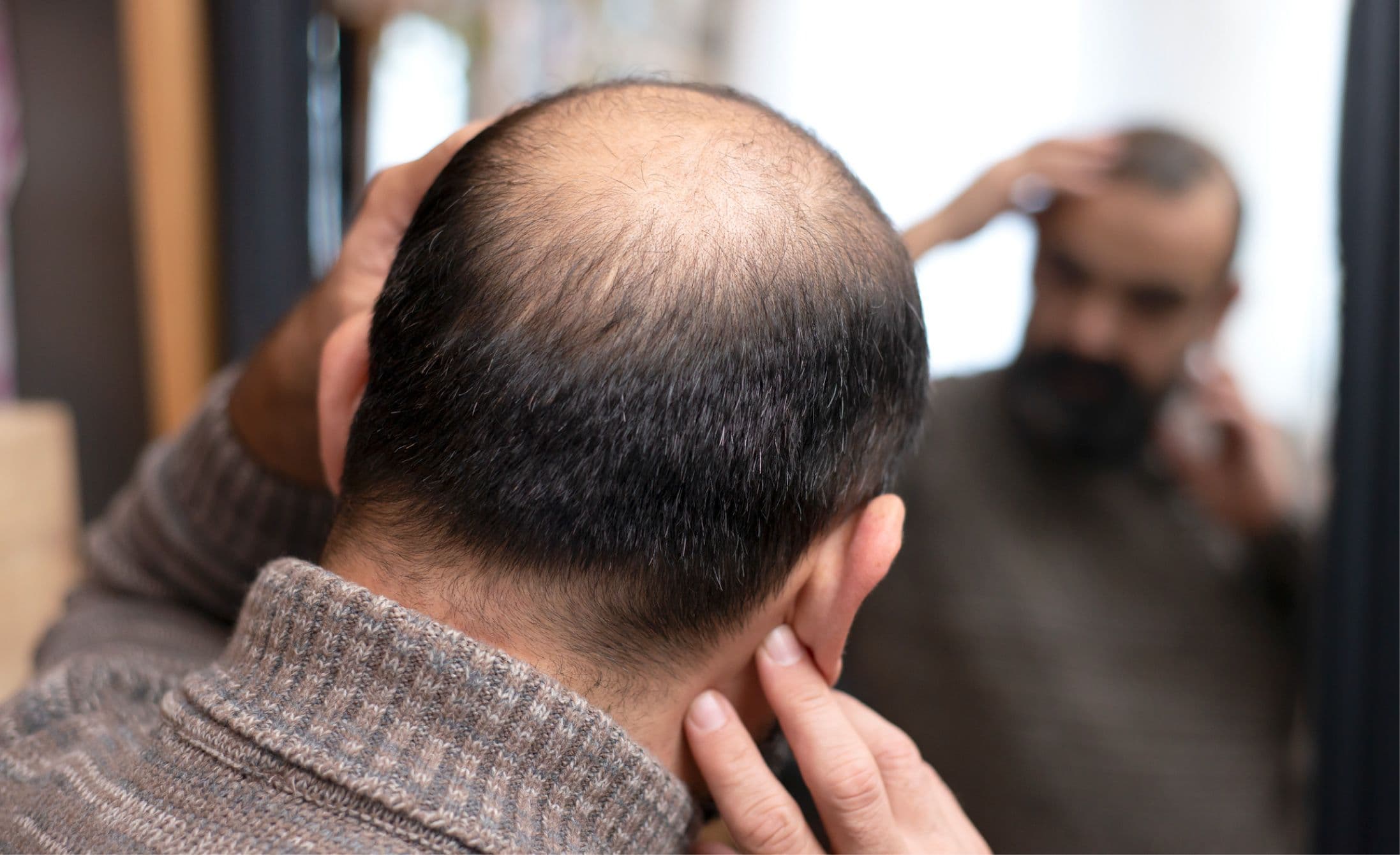
Male pattern baldness typically progresses through the Norwood scale, a visual guide that outlines seven stages of hair loss. This scale describes recognised patterns of hair loss and is not a prediction that everyone will progress through every stage.
In stages 1-2, men may notice slight recession around the temples, often described as an “M-shaped” hairline. As the condition progresses to stages 3-4, thinning extends across the top of the scalp, and some may experience a growing bald patch at the crown. At stage 5, the bridge of hair is narrower and sparser. At stage 6, the bridge is lost and the areas merge.
Is there a cure for baldness?
There is no permanent cure for male pattern hair loss, and no treatment works for everyone. Medicines used for the condition include finasteride tablets and topical minoxidil.
Finasteride 1 mg tablets are prescription-only and may be offered only if a clinician decides it is suitable following a consultation. Any benefits generally last only while treatment continues. These treatments can be more effective if started early in the hair loss process and likely benefits depend on the diagnosis, extent and duration of hair loss.
Treatment suitability depends on age. Finasteride is not indicated for patients under 18. Minoxidil foam is authorised for men aged 18 to 49, whereas Minoxidil 5% solution can be used for adult men aged 18 to 65 years.
Some individuals also explore hair transplants or hair thickening fibres.
Hair-loss myths and facts
| Myth | Fact |
|---|---|
| Wearing hats causes baldness | Hats have no impact on hair follicle health |
| Hair loss only comes from your mother’s side | Genetics from both parents influence male pattern baldness |
| Shampooing too often causes hair thinning | Hair washing does not affect follicles beneath the scalp |
| Stress alone causes permanent baldness | Stress can trigger temporary shedding, but genetic baldness is driven by hormones and heredity |
What are the side effects of hair loss treatments?
As with all medicines, you may experience side effects when taking hair loss treatments.
The side effects of finasteride can include:
Problems with achieving and maintaining an erection
Ejaculation problems, including reduced volume of ejaculate
Decreased sex drive
Depression
These side effects may affect up to 1 in 100 people. If you are experiencing side effects contact your doctor for medical advice.
Persistent sexual dysfunction has been reported after treatment stops. Its frequency is unknown.
The MHRA’s May 2026 safety update has issued a warning (as of May 2026) to men to raise awareness of the sexual and psychiatric side effects of finasteride. If you are taking finasteride 1mg for hair loss and develop depression or suicidal thoughts, stop taking it immediately and contact your doctor as soon as possible. If you have seriously harmed yourself or feel at risk of serious harm, call 999 immediately.
The most common side effects of minoxidil (the active ingredient in Regaine) are:
Headaches - affecting more than 1 in 10 people
Hair growth in unintended areas and a rash or dermatitis - affecting up to 1 in 10 people
If you are experiencing a severe allergic reaction (anaphylaxis, with symptoms like swelling, difficulty breathing, or rash), call 999 or go to A&E immediately.
It’s important to discuss any concerns with a healthcare professional if you’re looking to treat your hair loss so they can recommend a suitable course of treatment.
Find out more about side effects by reading the patient information leaflets for finasteride and Regaine foam.
Baldness causes frequently asked questions
When does male pattern baldness start?
Male pattern baldness can begin at almost any adult age and becomes more common with age.
Is male pattern baldness genetic?
Yes, male pattern baldness is genetic and passed on by both sides of the family.
Can you reverse male pattern baldness naturally?
There is insufficient reliable evidence that scalp massage, essential oils or supplements can stop or reverse male pattern hair loss. Speak to a healthcare professional before using supplements or topical remedies.
References
https://www.nhs.uk/symptoms/hair-loss/

You might also be interested in...
Back to Haircare