In this Article:
01: Common dog ear problems 02: Gathering the right supplies and tools to clean your dog’s ears03: Preparing your dog for ear cleaning04: Step-by-step guide to cleaning your dog’s ears05: Recognising signs of dog ear problems06: ConclusionCommon dog ear problems
Common ear problems for dogs can include infections, excessive build-up of wax and debris, allergies, and ear mites. These issues can often lead to swelling, itching, and general discomfort, making it imperative to keep on top of your dog’s ear health.
Developing a consistent, effective routine for cleaning your dog’s ears can help prevent some of these common problems and positively contribute to your dog’s overall health and wellbeing.
Gathering the right supplies and tools to clean your dog’s ears
Before cleaning your dog’s ears for the first time, we would recommend speaking to your vet for any advice specific to your dog.
Once you’re ready to clean your dog’s ears, your first step should be to gather everything you need so you have it within reach. You should assemble the following tools and supplies before getting started:
Cotton pads or cotton balls: Their soft, absorbent texture makes them ideal for removing cleaning solution and dirt from your dog’s ears.
Ear cleaner: Speak to your vet to get recommendations about ear cleaning solutions, which should not include alcohol or hydrogen peroxide, as these can be harsh or harmful to your dog’s ears.
Ear bulb syringe: These rubber or silicone tools can flush out debris from the ear canal but should only be used as advised by your vet.
Wipes or towels: These should be used throughout the process to clean up any mess and spills.
Rewards or treats: To make the experience positive and help encourage your dog to enjoy ear cleaning as a regular part of your routine together, provide them with treats throughout to reward good behaviour.

Preparing your dog for ear cleaning
Before cleaning your dog’s ears, there are several processes you can go through to make the experience as positive and free from stress as possible.
Start by choosing a comfortable location with minimal distractions. Spend time petting and stroking your dog before you begin to help them feel calm and relaxed, rather than anxious about the experience.
You should also make a habit of gently stroking and massaging your dog’s ears in everyday life to get them used to the feeling of having their ears touched. This familiarity will help the ear cleaning process feel less intimidating or new.
You should also make sure your dog is in a secure position while still being comfortable, to reduce the risk of injuries from fidgeting or moving around. When you have them in position, check the ears for anything unusual or concerning.
When you start the ear cleaning process, be sure to avoid inserting tools deep into the ear canal; instead, clean only the visible, external part of the ear to protect your dog’s delicate inner ear area. Avoid forceful or sudden movements and, if your dog makes these, take a short break and reassure them.
Step-by-step guide to cleaning your dog’s ears
Once you have your supplies to hand and have prepared your dog, it’s time to clean their ears. Follow these steps to clean your dog’s ears safely and effectively:
Apply the cleaning solution: Reveal the ear canal by gently lifting the flap of your dog’s ear and use a steady hand and gloves if required to apply a small amount of cleaning solution to the visible section of the ear. Be sure to use a solution recommended by your vet.
Massage the base of the ear: Gently massage the base of your dog’s ear for around 30 seconds. A squishing sound indicates that the solution is loosening any debris and wax.
Allow your dog to shake: Your dog may naturally want to shake their head. Allow them to do this to help dislodge the loosened debris and cleaning solution, cleaning up any mess with towels.
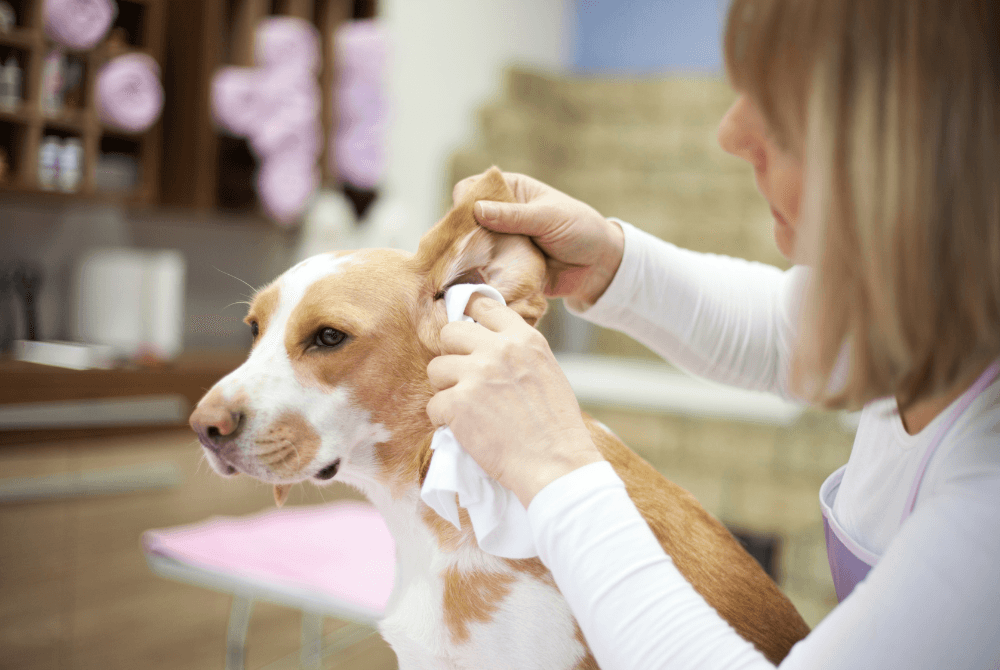
Wipe away the debris: Using a cotton pad or ball, gently remove any visible wax, debris, or remaining cleaning solution from the outer ear. Do not insert the cotton pad or ball deeply.
Repeat if required: Repeat the process on the other ear if that also needs cleaning, always being sure to use a fresh cotton pad or ball.
Comfort and reward: Give you dog affection, praise, and treats to reassure and reward them once the cleaning process is complete.

Recognising signs of dog ear problems
When cleaning your dog’s ears and during normal day-to-day life, it’s important to keep an eye out for signs of ear problems. Signs that your dog may have ear issues can include:
Scratching of ears: Frequent scratching of the ears could indicate irritation or discomfort.
Head shaking: Excessive head shaking, especially alongside scratching of the ears, can indicate ear problems.
Unpleasant odours: Foul smells coming from your dog’s ears could be the sign of an infection or other issues.
Discharge: Whether it’s wax, blood, or pus, any ear discharge should be reported to your vet.
Inflammation: If your dog has red, swollen, or inflamed ears, this can be the sign of an underlying issue.
Regular head tilting head: If your dog regularly tilts their head or holds it to the side, this can be the sign of an ear problem.
Hearing loss: If your dog does not respond as well as usual to sounds or commands, this could be an ear issue.
Conclusion
Good ear health is vital for a dog’s wellbeing, and you can play your part by ensuring you keep your dog’s ears as clean as possible. Making the right preparations, cleaning the ears themselves, keeping an eye out for signs of ear problems, and maintaining regular dialogue with your vet about the needs of your specific breed of dog can all help to encourage positive ear health for your pet.