In this Article:
01: What you need to clean your pet’s eyes02: How to clean pets’ eyes: four simple steps03: Advice for cleaning your pet’s eyes04: Conclusion
What you need to clean your pet’s eyes
Before you get started on cleaning your pet’s eyes, it’s advisable to gather the necessary tools and supplies you’ll need. This is a basic list of things to have within reach to help you clean your pet’s eyes effectively and efficiently:
A bowl of warm water
A towel
Cotton wool, cotton balls, cotton pads, or specialist cleaning wipes
A saline solution
Treats (to reward your pet’s good behaviour)
How to clean pets’ eyes: four simple steps
If you’re looking for a straightforward guide on how to clean your cat’s eyes or dog’s eyes, follow these four simple steps.
It’s also worth noting that, as you prepare your pet for eye washing, if you notice redness, swelling, or excessive discharge in your pet’s eye, you should contact your vet. Cleaning your pet’s eyes should be an important part of your standard pet care routine, but you should always speak to your vet about any significant problems.
1. Gather everything you need in advance
Ensuring you have everything to hand from the start is of vital importance when cleaning your pet’s eyes. Lay out the items listed above within reach so that you don’t have to leave your pet midway through the process and to give you the best chance to complete it quickly.
It’s also important to clean your hands beforehand to prevent the transfer of any dirt to your pet’s eyes.
2. Keep your pet comfortable and calm
Calm pets are much more likely to respond well to having their eyes cleaned. For this reason, it’s important to calm your pet beforehand with stroking and treats, as well as throughout the eye cleaning process. This will help keep your pet comfortable and calm, which is especially important for younger pets, who may find the experience intimidating.
3. Clean the eyes and face
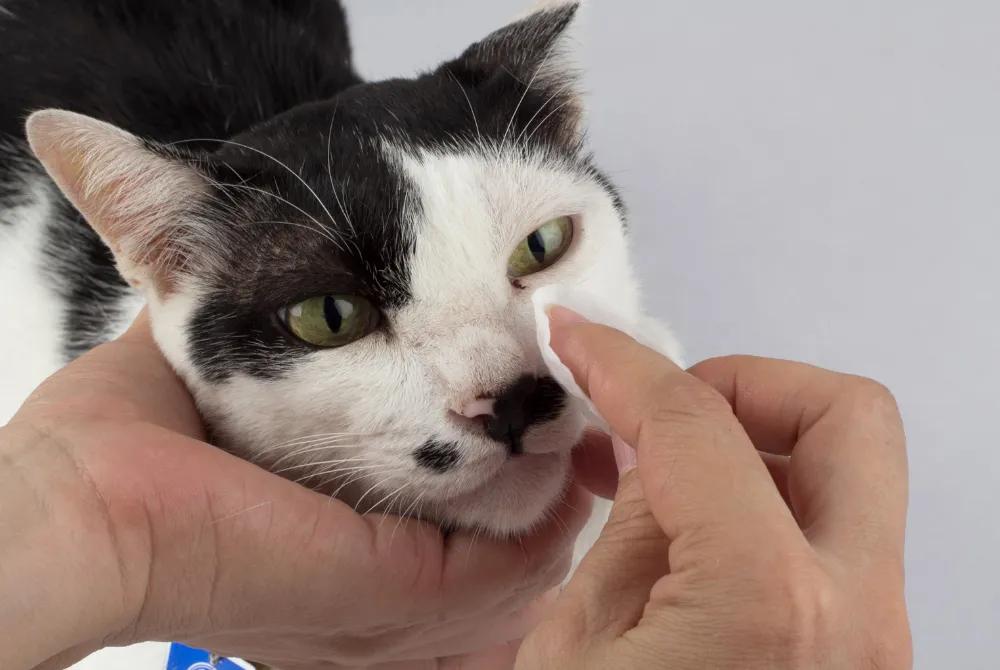
To clean your pet’s eyes, dip a cotton ball or cotton wool into warm water, which should not be too hot or too cold, and softly dab your pet’s eye area and around the eye. Hold your pet’s head steady while doing this to avoid injuring your pet’s eyes.
Use a separate piece of cotton wool or cotton ball to work around the inner corners of the eye area to remove discharge, debris, and dirt, without touching the eyeball itself.
To prevent injury to your pet’s eye, make sure you keep their head steady while doing this action. Using a different cotton pad, carefully work on the inner corners of the eye area without touching the actual eye to remove any dirt, discharge, or debris.
As well as warm water, a quality saline solution can also help to clean your pet’s eyes, while specialist cleaning wipes like Optixcare Eye Cleaning Wipes can also be used to gently clean and soothe your pet’s eyes and the surrounding area.
Continue with these steps until both eyes and the area of the face around them are clean.
4. Dry and reward your pet
Once you’re done, reach for a clean, dry towel and use it to dry your pet’s eye area and face, without making contact with the eye itself. While gently patting your pet dry, use the opportunity to check for any irritation.
When your pet is suitably dry, reward them with a treat. This will instil the idea that eye cleaning is a positive experience that will lead to reward, encouraging them to embrace this important part of your routine together. Starting this process when your pet is young will help ingrain the idea and help them get used to having their eyes cleaned.

Advice for cleaning your pet’s eyes
Groom your pet regularly and clean their eyes as part of this process. This will help your dog or cat get used to the routine, as well as giving you the best chance of keeping their eyes clean and free from infection.
Look out for common eye problems like conjunctivitis, infections, dryness, or soreness, and speak to your vet if you think an issue might be significant.
Get in touch with your vet if you notice any abnormal issues in or around your pet’s eyes. This might include swelling and redness, persistent, excessive discharge from the eye, or vison or behavioural problems.
Wash your pet’s eyes a few times a week to help your pet maintain healthy eyes and to give you a chance to inspect their eyes for any potential issues to discuss with your vet.
Look into and speak to your vet about products that could help clean your pet’s eyes, such as pet-friendly saline solution, wash cloths and cotton balls, eye drops, and eye lubricant.

Conclusion
Regular cleaning of your pet’s eyes should be a mainstay in your health and grooming routine together. It helps control the build-up of debris, reduces the risk of potential infection, and gives you an opportunity to inspect their eyes and faces for signs of problems.
By following our simple steps of gathering your supplies in advance, calming your pet, gently but thoroughly cleaning the eyes and surrounding area, and drying and rewarding your dog or cat, you can help to keep them clean and healthy. While this is a great start, always contact your vet for further advice if you notice anything that concerns you.