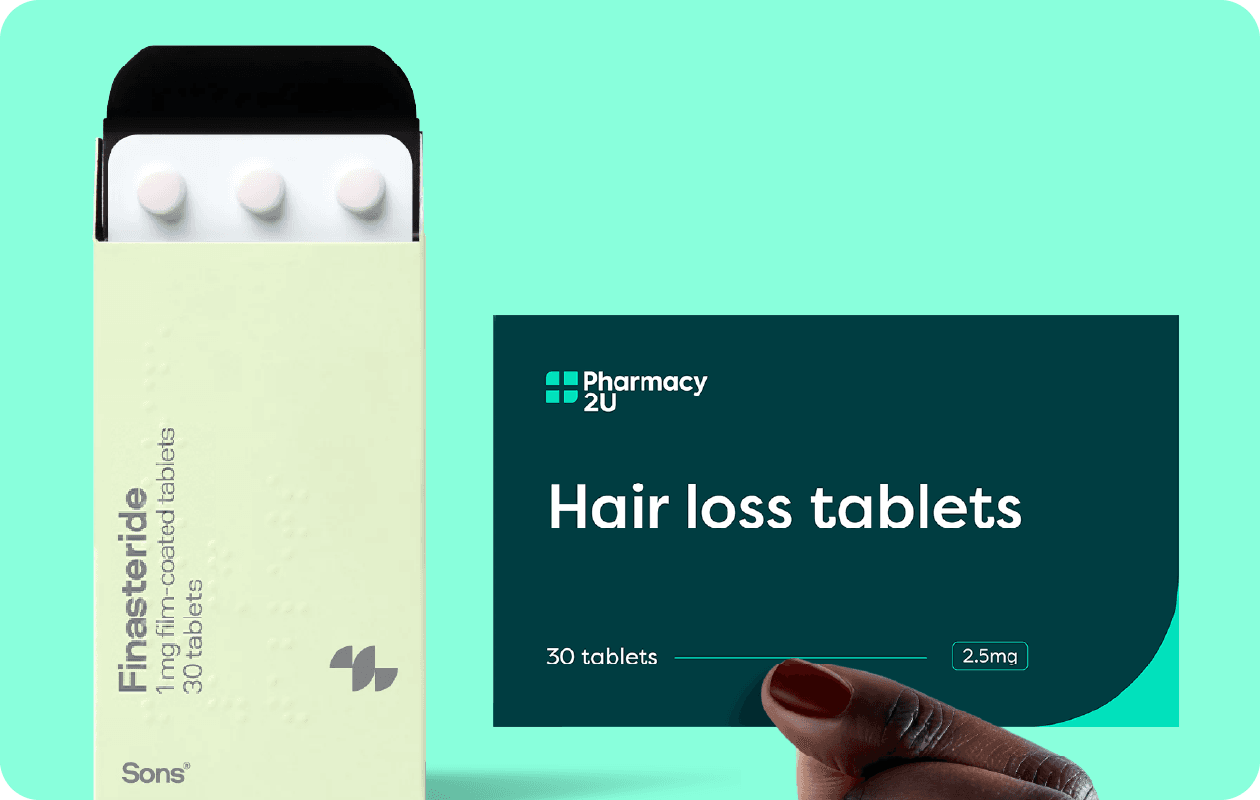
Dual action: Combined hair-loss tablet treatments
This dual-action treatment combines daily Sons finasteride tablets with a complementary daily oral treatment to help tackle male pattern hair loss from two angles, slowing further loss and supporting regrowth.
From £84.80† with code: WELCOME20
Changes may be noticeable in 3 to 6 months*
Unlimited 1-to-1 clinical support**
Pay in a way that suits you
What to expect on your hair-loss journey

Months 1 to 3: Getting started

Months 3 to 6: Early progress

Months 6 to 12: Ongoing results
Results vary from person to person. Treatment is subjection to clinical assessment. Continue treatment as advised to give it the best chance of success. You can pause or cancel anytime.
Hair-loss support backed by science
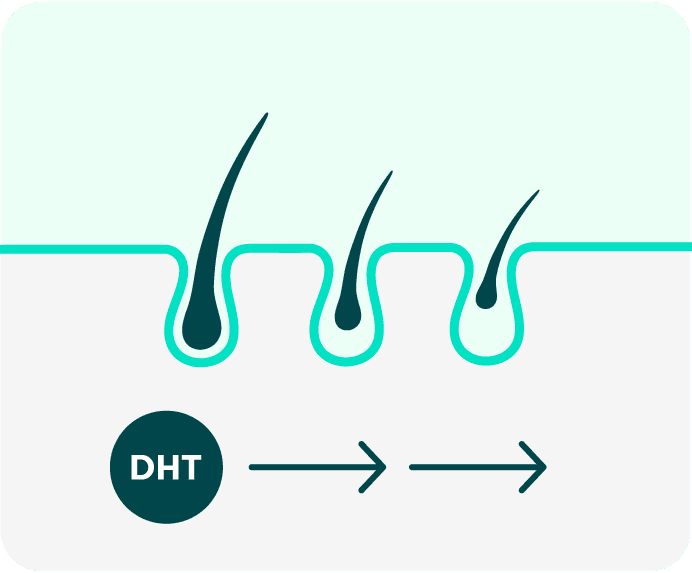
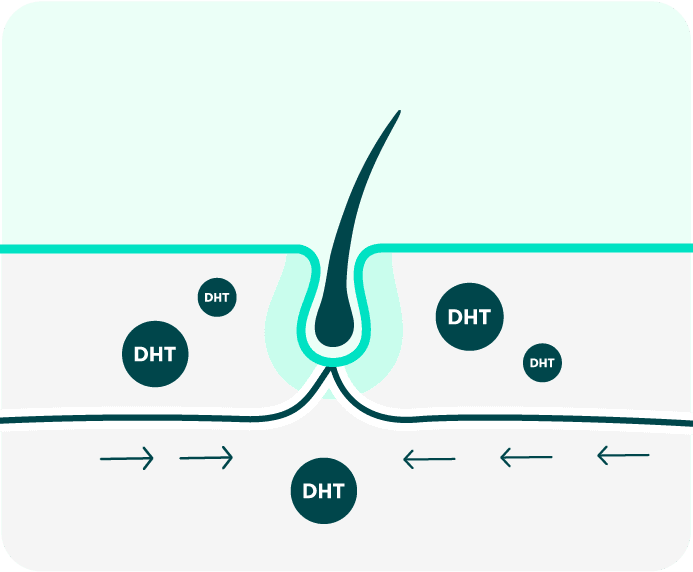
Why does male-pattern hair loss happen?
DHT can gradually shrink hair follicles, leading to thinning hair and hair loss.
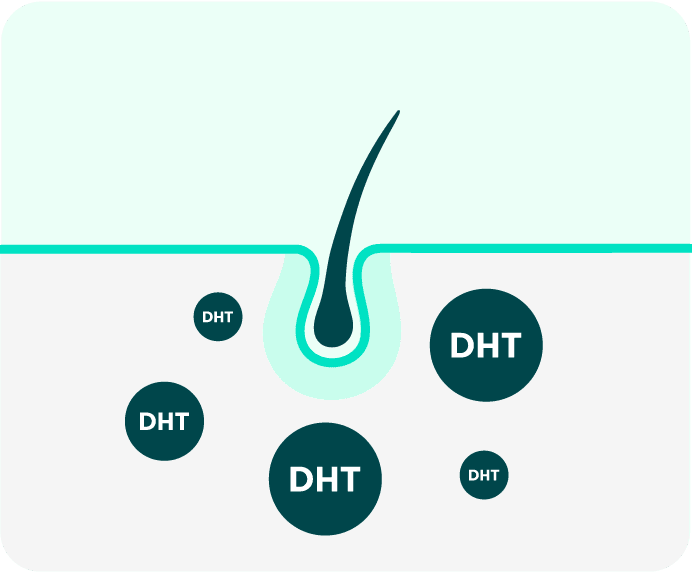
How finasteride tablets work
Finasteride lowers scalp DHT levels to help prevent further hair loss and support hair regrowth.
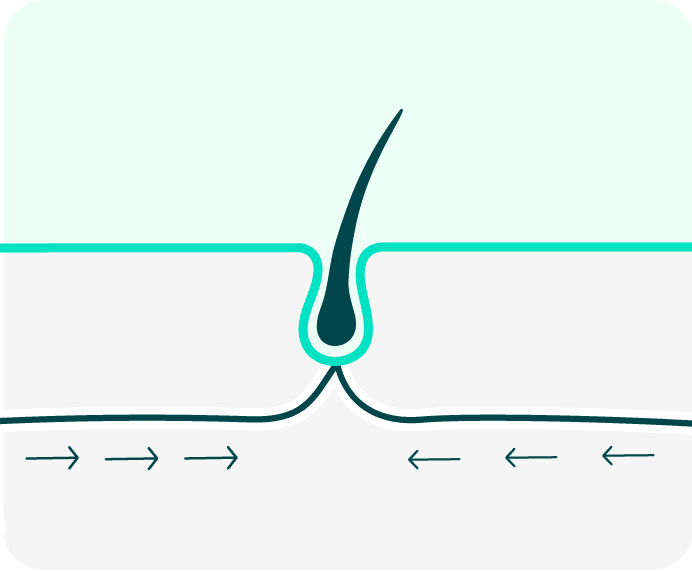
How daily hair loss tablets work
Daily hair loss tablets stimulate hair follicles to encourage thicker, fuller hair growth.
Using the treatments together
Up to 92.4%^ of men saw stable or improved hair density after combining both treatments.
Explore dual action hair-loss tablet treatment plans & pricing
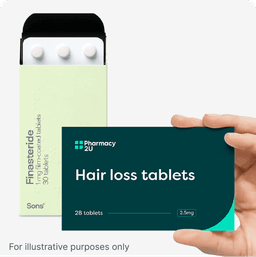
Dual Action: Combined hair-loss tablets

| 3 month supply | £106.00 |
| 6 month supply | £189.00 |
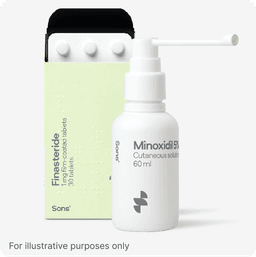
Dual Action: Sons 5% minoxidil spray & Sons finasteride tablets
| 3 month supply | £106.00 |
| 6 month supply | £189.00 |
Important safety information: Finasteride can affect mood and mental health in some people. If you experience depression, persistent low mood, anxiety or thoughts of self-harm, stop taking finasteride and seek medical advice immediately. Finasteride may also cause sexual side effects, including reduced sex drive, erectile dysfunction or ejaculation problems. If you or someone else is in immediate danger, call 999 or go to A&E. Please read the Patient Information Leaflet and Patient Alert Card before starting treatment. Daily hair-loss tablets are prescribed off-label for hair loss and may cause changes in heart rate, blood pressure, fluid retention, or increased hair growth elsewhere on the body. If you develop chest pain, dizziness, fainting, a rapid heartbeat, or swelling, seek medical advice immediately. Please read the Patient Information Leaflet before starting treatment.
What our patients say


Rated excellent with 400,000+ reviews as of October 2023
Worry free service
This service has taken all the worry out of ordering repeat perscriptions. They remind you when perscriptions are due & they are posted & within a couple of days they are there on your door mat. Exemplary service. Thank you.
Hester Pendino

Great service
Great service. With good liaison with my GP. And order always efficiently delivered. So much easier than queueing at the local chemist. I started using Pharmacy2U during the pandemic and no turning back.
Hilary Simpson
The help line staff were excellent
The help line staff were excellent, they understood my issue straightaway, told me they would need to speak to a line manager and would get back to me. The same person got back to me later in the day with an answer, issue resolved
Linda Lauren

Great user friendly service
This is a very easy service to use.
I order my medication online from the drs it goes straight through to Pharmacy2U they confirm they have received it and it is sent out for delivery. With emails keeping me informed of its status all along the way.Neil Etheridge
I get reminders when I need to order
I get reminders when I need to order. It is easy to order and I get updates to let me know how my order is progressing. Within a very short time it is put out for delivery. It is then up to Royal Mail to post it through my letterbox.
Janet Tittensor
Losing the monthly stress
Being able to request my prescription from the doctors and knowing that the items I require will be delivered to my door without delay. Originally I would go to the pharmacy after a 5 day wait to find that my prescription was not ready, so thank you for making my life easier.
Pat Cruttenden
Excellent service
Excellent service. Timely as ever. Prompted by P2U to re-order. From sending order to receipt was 7 days. Excellent as it includes GP’s approval sign off.
Ceijag
The clinicians behind the care

“We know that privacy matters, which is why every order is delivered discreetly to your address.”Dr Kieran Seyan
GMC Number: 6104204
“Every journey with Online Doctor is unique, which is why our clinical advice & support is tailored to you”Dr Mitra Dutt
GMC Number: 6077868
“When you're ready to take the next step, we're here to help, with fast delivery so your journey to better health can begin.”Dr Gigi Taguri
GMC Number: 6129350
“You're never on your own. Our UK clinical team is on hand to support you every step of the way”Dr Neel Patel
GMC Number: 7085151
Expert clinical advice to support your hair loss journey
Frequently asked questions about hair loss & dual action tablets
This combination pairs a licensed treatment for male pattern hair loss with a second tablet-based treatment:
Finasteride 1mg tablet: a medicine licensed to treat male pattern hair loss in adult men. It works by reducing DHT, a hormone involved in hair loss.
2.5mg daily hair-loss tablet: a medicine thought to improve blood flow to hair follicles and prolong the hair growth phase. Suitability is assessed individually by your clinician.
The patient information leaflet can be found here for finasteride and here for daily hair-loss tablets. Note that the second leaflet describes its licensed use for high blood pressure.
For the finasteride 1mg tablet:
Take 1 tablet once daily, with or without food. Swallow the tablet whole. Do not crush or break the tablet
If you miss a dose, take the next dose at the usual time. Do not take a double dose
For the 2.5mg daily hair-loss tablet:
The starting dose used within this service is 2.5mg once daily
Take at the same time each day, with or without food
If you miss a dose, take the next dose at the usual time. Do not double doses
You must continue to take both medicines for the treatment to work.
Finasteride and the other daily hair-loss tablet work in different ways and may be used together when clinically appropriate. Because the latter is used off-label for hair loss, the evidence for this specific combination is more limited than for finasteride alone, or for finasteride combined with topical minoxidil. Individual results vary, and not everyone responds to treatment. Your clinician can talk you through the reasoning behind recommending this combination for you specifically.
Current evidence suggests low-dose oral minoxidil may provide similar improvements in hair growth to topical minoxidil for some patients, although individual responses vary and the evidence base remains evolving.
Several studies have compared the tablets with topical minoxidil. Three studies published between 2024 and 2025 found that both treatments improved hair thickness and hair growth by a similar amount.
One of these studies combined the results from multiple clinical trials and found no meaningful difference between either at the doses tested. This research is still relatively new, and treatment responses vary between individuals. Speak to your clinician if you have questions about what this means for you.
The medicines begin exerting their intended effects after treatment starts, but visible improvements may take several months and some patients may not respond. You will usually need to take finasteride and the other daily hair-loss tablets continuously for at least 6 to 12 months before assessing whether it is working for you. Continued treatment is required to maintain any benefits. If treatment is stopped, hair loss will generally begin to return over time.
Although oral minoxidil is licensed for severe hypertension, clinicians sometimes prescribe it off-label for hair loss at much lower doses where they consider this clinically appropriate.
Some people notice more hair shedding in the first few weeks or months. This can be alarming, but it is a recognised and usually temporary effect as older hairs are shed to make way for new growth. It does not necessarily mean treatment is not working, and not everyone experiences it.
Contact your clinician if shedding is severe, continues for an extended period, or you are concerned about the pattern of your hair loss changing.
The active ingredient lowers blood pressure by relaxing blood vessels. Studies of low-dose oral minoxidil for hair loss suggest that significant reductions in blood pressure are uncommon, although individual responses vary. However, the evidence base is smaller and less mature than for the licensed hypertension use, and individual responses vary.
Yes. Finasteride can cause sexual side effects in some men, including reduced sex drive (libido), erectile dysfunction and problems with ejaculation.
Some patients have reported sexual side effects that continued after treatment was stopped. The MHRA has also advised that sexual dysfunction may contribute to mood-related symptoms in some people.
Finasteride has been associated with low mood, depression and suicidal thoughts. If you experience any changes in your mood, mental wellbeing or sexual function while taking finasteride, speak to your healthcare professional.
Finasteride has also been associated with reduced semen quality and fertility problems in some men. Available evidence suggests these effects are generally reversible after discontinuing treatment.
Finasteride has been associated with depression, suicidal thoughts and sexual dysfunction.
Depression may include feelings of low self-esteem, loss of interest in activities and feelings of hopelessness. Physical symptoms of depression may include headaches, tiredness and disturbed sleep patterns.
If you develop any suicidal thoughts, stop finasteride immediately and seek urgent help from your GP. If you require urgent help, call 111 or 999, or go to A&E.
No. This combination is intended for adult men with male pattern hair loss and is only offered following individual clinical assessment. See the Warnings section below for who shouldn't take this combination, and who needs to discuss it with a clinician first.
Uncommon (up to 1 in 100 people) side effects include:
difficulty getting or keeping an erection
reduced desire for sex
changes in ejaculation, for example a decrease in the amount of semen released. This does not appear to affect normal sexual function.
Not known (frequency cannot be estimated from available data):
breast swelling or tenderness
testicular pain
blood in semen
palpitations
persistent erectile, libido, or ejaculation problems after stopping treatment
male infertility and/or poor semen quality
changes in liver function shown on a blood test
anxiety
suicidal thoughts
Common side effects at the low dose used for hair loss include:
increased hair growth on the face or body
headache
dizziness
ankle swelling
palpitations
Possible side effects of the 2.5mg tablet listed in the Patient Information Leaflet at the higher doses used for hypertension.
These are included because they form part of the licensed product's known side-effect profile. Some are reported more often at hypertension doses than would be expected at the low dose used here, but you should still be aware of them.
Very common (more than 1 in 10 people) include:
increased heart rate
inflammation of the lining that surrounds the heart
abnormal electrocardiogram (ECG)
increased hair growth
hair colour changes
Common (up to 1 in 10 people)
accumulation of fluid around the heart
compression of the heart due to a build-up of fluid
fluid retention
gastrointestinal disorder
Uncommon (up to 1 in 100 people):
accumulation of fluid between the layers of tissue that line the lungs and chest cavity
breast tenderness
Rare (up to 1 in 1,000 people):
decrease in white blood cells
reduction in blood platelets, which increases the risk of bleeding or bruising
serious illness with blistering of the skin, mouth, eyes and genitals (Stevens-Johnson syndrome)
inflammation and blistering of the ski
rash
Not known:
chest pain (angina)
swelling of the ankles, feet or fingers associated with or independent of weight gain
reduced kidney function resulting in increased creatinine and urea levels in your blood
extensive peeling and detachment of the skin on much of the body surface (toxic epidermal necrolysis)
If any side effect becomes serious, or you notice one that is not listed here, tell your doctor or pharmacist. It may help to note down what happened, when it started, and how long it lasted.
The MHRA has highlighted reports of psychiatric side effects and sexual dysfunction in patients taking finasteride.
Finasteride has been associated with depressed mood, depression, suicidal thoughts and sexual dysfunction.
Sexual side effects may include reduced sex drive, erectile dysfunction and ejaculation disorders.
Some patients have reported sexual side effects that continued after stopping treatment.
You will be provided with a Patient Information Leaflet and a Finasteride Patient Card. Please read both.
Tell your clinician before starting treatment if you have a personal history of depression, low mood or suicidal thoughts.
If you experience sexual dysfunction while taking finasteride, contact your healthcare professional.
If you develop depressed mood, depression or suicidal thoughts while taking finasteride, stop treatment and contact a healthcare professional as soon as possible.
If you feel at risk of harming yourself, or have seriously harmed yourself, call 999 or seek emergency medical help immediately.
This treatment is prescribed off-label for hair loss in male pattern baldness following an assessment by a clinician and should not be used by women.
Tell your clinician before starting treatment if you have a history of heart disease, heart failure, chest pain (angina), a previous heart attack, kidney disease, or blood pressure problems.
The tablet can cause your body to retain salt and water, which may lead to swelling of the ankles, feet, hands or legs and unexpected weight gain.
The active ingredient can increase your heart rate and may cause palpitations. In some people, chest pain (angina) may occur or worsen.
Unwanted hair growth (hypertrichosis) is a very common side effect. This may affect the face, arms, legs or other areas of the body.
You may feel dizzy or light-headed when starting treatment, particularly when standing up quickly. Taking your dose in the evening may help reduce this effect.
If you are...
you are allergic to finasteride, minoxidil, or any other ingredient in either product
you are female
you have phaeochromocytoma
you are already taking finasteride or dutasteride for a prostate condition (BPH)
your partner is trying to get pregnant
you have a history of heart disease, heart failure, angina, a previous heart attack, kidney disease, or blood pressure problems
You should do so, if you experience...
signs of an allergic reaction: swelling of the lips, face, tongue, or throat; difficulty swallowing; hives; breathing difficulties. Stop immediately and seek medical help.
depression, or feelings of severe sadness or worthlessness
changes in breast tissue, including lumps, pain, enlargement, or nipple discharge, which can be a sign of a serious condition
light-headedness, dizziness or faintness, particularly on standing
signs of fluid retention, including swelling of the ankles, feet or hands, tighter-fitting rings, or unexplained weight gain
increasing breathlessness, wheeze, or unusual tiredness, especially with an existing heart condition
new chest pain, or existing chest pain (angina) becoming more frequent or severe
any other unexpected new symptom
*Data sourced from: Recent Advances in Drug Development for Hair Loss (Kim et al. 2025). It may take around 3 to 6 months of daily treatment before an effect on hair loss becomes apparent. Results and timing vary, and continued treatment is generally needed to maintain any benefit. Hair regrowth varies by individual, and treatments carry risks. All treatment options are subject to clinician advice, suitability and tolerability. Always read the Patient Information Leaflet before taking any medication and follow the advice given by your clinician. A clinician will assess your medical history, current medicines, treatment goals, and overall suitability. Treatment is not guaranteed. Side effects and risks vary by medicine.
**There may be occasions where prescribing or delivery takes a little longer. This can happen if your medical history requires further clinical review before we can confirm and dispatch your treatment. There are also some instances where it may take longer to get a response from one of our clinicians.
^Dual action: 'Up to 92.4%^ of men saw stable or improved hair density after combining both treatments.' (Johnson et al, Cureus 2025).
†New patients to the Pharmacy2U Online Doctor hair-loss service only. Code is valid until midnight on 31/12/2026. Orders must be made through the Online Doctor service. Orders will be despatched upon doctor’s approval. This offer is subject to availability and may be withdrawn at any time without prior notice. For full terms and conditions and exclusions please visit our website at pharmacy2u.co.uk/about/terms-and-conditions.
These medicines are subject to additional monitoring. You can help identify new safety information by reporting suspected side effects through the MHRA Yellow Card Scheme.