


2 million registered patients

NHS partner for 25 years

UK’s largest online pharmacy

Proudly certified BCorp
Have you checked recently to see if you qualify for free NHS prescriptions?
In England, the standard NHS prescription charge is currently £9.90 per item.
The NHS considers a few different factors when offering free prescription exemptions, and a person’s eligibility to apply for a medical exemption certificate.
This includes age, income and any diagnosed medical conditions. Some prescribed items are always free of charge on the NHS, such as contraceptives.
Am I entitled to free NHS prescriptions?
You’re eligible for free NHS prescriptions if you’re in one of the following groups, at the time the prescription is dispensed:

aged 60 or over
under 16 years old
are 16 to 18 and in full-time education
If you receive Income-related Employment and Support Allowance, then you, your partner and any dependant aged under 20 are entitled to free NHS prescriptions.
You are entitled to free NHS prescriptions if you or your partner receive:
Pension Credit Guarantee Credit
Pension Credit Guarantee Credit with Savings Credit
If you’re receiving either Pension Credit with Savings Credit alone, contribution-based Jobseeker’s Allowance, or contribution-based Employment and Support Allowance, then you can apply for help with prescription costs through the NHS Low Income Scheme.
You are also entitled to free NHS prescriptions if you receive:
Universal Credit and meet the relevant criteria
You can apply to the NHS Low Income Scheme with one of these certificates:
a valid HC2 certificate, for full help with health costs including NHS prescription charges
named on a HC3 certificate, but this is only for partial help with health costs and does not entitle you to free NHS prescriptions
You qualify for free NHS prescriptions if you:
are pregnant or have had a baby in the past 12 months, and have a valid maternity exemption certificate (MatEx)
have a specific medical condition and have a valid medication exemption certificate (MedEx)
have a valid war pension exemption certificate and the prescription is for your accepted disability
are being treated in an NHS hospital – medication for inpatients is always free
All contraception that is prescribed on an NHS prescription is always free of charge.
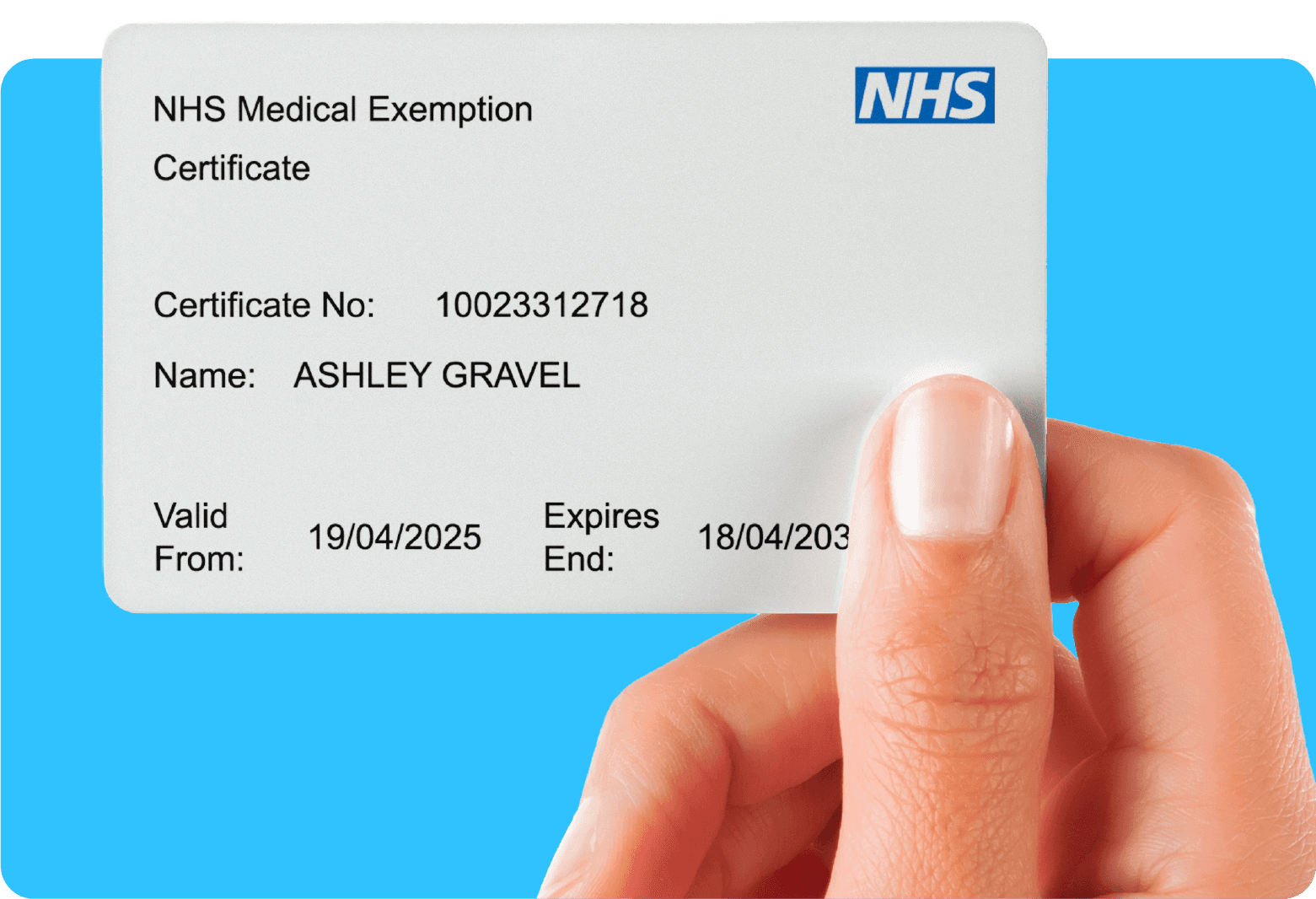
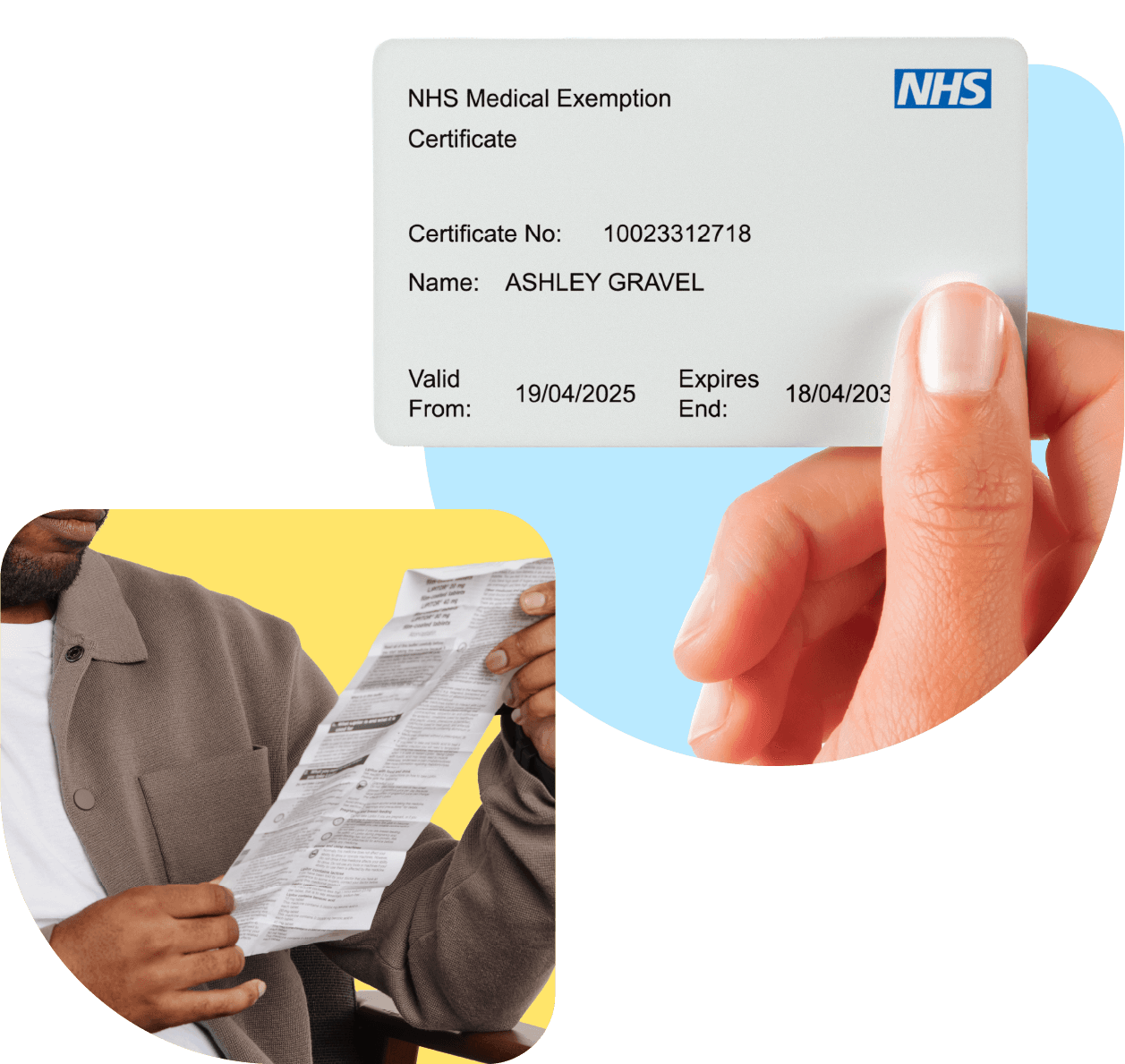
How do I get my NHS medical exemption certificate?
Depending on the NHS exemption certificate you’re eligible for, there are different ways to apply.
Medication exemption certificates – Speak to your GP surgery
Maternity exemption certificates – Speak to your doctor, midwife or health visitor
Students aged 19 and over – you can apply for help through the NHS Low Income Scheme. You can apply online in certain circumstances, otherwise you’ll need to complete a HC1 form and post it to the address provided.
You can order a HC1 form online.
What medical exemptions could I be entitled to?
If you have one of the following medical conditions, you’re entitled to free NHS prescriptions:
cancer, including the effects of cancer
a permanent fistula (for example, a laryngostomy, colostomy, ileostomy or some renal dialysis fistulas) requiring continuous surgical dressing or an appliance
a form of hypoadrenalism (for example, Addison’s disease) for which specific substitution therapy is essential
diabetes insipidus or other forms of hypopituitarism
diabetes mellitus, except where treatment is by diet alone
hypoparathyroidism
myasthenia gravis
myxoedema (hypothyroidism requiring thyroid hormone replacement)
epilepsy requiring continuous anticonvulsive therapy
a continuing physical disability that means you cannot go out without the help of another person
You need to speak to your GP to confirm the diagnosis of your condition. They will then give you an NHS prescription exemption application form to complete.
Frequently asked questions
Your NHS medical exemption certificate is valid for 5 years or until your 60th birthday – whichever is sooner.
If you lose or damage your exemption certificate, you can request a replacement here. You need to contact your GP to renew your certificate. If you’re a Pharmacy2U patient, we’ll notify you around a month before it expires – the NHS should also remind you. You can check if your NHS prescription exemption is still valid online.
If you’re not currently entitled to free NHS prescriptions, you could save money with a prescription prepayment certificate. It’s like a ‘season ticket’ in that you pay a set price, and this covers you for as many prescriptions as you need until it expires.
There are two options: you can buy a 3-month certificate for £32.05 or a 12-month certificate for £114.50 (as of 1st May 2024).
This can be paid either upfront or in instalments. Depending on the number of prescription items you need, one of these options could save you money compared to paying for each prescription individually.
There’s a dedicated prescription prepayment certificate for people taking HRT. It costs £19.80 (as of 1st May 2024). If you have more than two HRT prescription items in a year, a prepayment certificate could save you money.
At present, you can’t apply for an NHS medical exemption certificate online.
Speak to your GP or doctor to find out if you’re entitled to a certificate due to your medical condition, and if so, they will give you an application form to fill out.
You should receive your medical exemption certificate in the post within 10 working days of the application form being received.
If you’ve already applied for your prescription prepayment certificate (PPC) or HRT PPC, you can get a refund – but not for the HRT PPC itself.
You need to ask your pharmacist, hospital or doctor for an NHS receipt and an FP57 refund form when you pay for your medication – you cannot get one later.
The receipt and form will tell you exactly what you need to do to get your refund. You need to apply for a refund within three months of paying the prescription charge. If you have a good reason why you couldn’t apply within three months, you can send an explanation letter with your FP57 form, and this will be taken under consideration.
Yes, a medical exemption certificate can be used at any community pharmacy in the UK. The certificate is only valid for free NHS prescriptions, and it must be shown each time a new prescription is collected.
You can check online to see if you’re eligible for free NHS prescriptions and any help with other NHS costs, including sight tests and NHS dental treatment.
Some prescribed items are always free, including contraception and medicines given to hospital inpatients.
What our patients say


Rated excellent with 400,000+ reviews as of October 2023
Worry free service
This service has taken all the worry out of ordering repeat perscriptions. They remind you when perscriptions are due & they are posted & within a couple of days they are there on your door mat. Exemplary service. Thank you.
Hester Pendino

Great service
Great service. With good liaison with my GP. And order always efficiently delivered. So much easier than queueing at the local chemist. I started using Pharmacy2U during the pandemic and no turning back.
Hilary Simpson
The help line staff were excellent
The help line staff were excellent, they understood my issue straightaway, told me they would need to speak to a line manager and would get back to me. The same person got back to me later in the day with an answer, issue resolved
Linda Lauren

Great user friendly service
This is a very easy service to use.
I order my medication online from the drs it goes straight through to Pharmacy2U they confirm they have received it and it is sent out for delivery. With emails keeping me informed of its status all along the way.Neil Etheridge
I get reminders when I need to order
I get reminders when I need to order. It is easy to order and I get updates to let me know how my order is progressing. Within a very short time it is put out for delivery. It is then up to Royal Mail to post it through my letterbox.
Janet Tittensor
Losing the monthly stress
Being able to request my prescription from the doctors and knowing that the items I require will be delivered to my door without delay. Originally I would go to the pharmacy after a 5 day wait to find that my prescription was not ready, so thank you for making my life easier.
Pat Cruttenden
Excellent service
Excellent service. Timely as ever. Prompted by P2U to re-order. From sending order to receipt was 7 days. Excellent as it includes GP’s approval sign off.
Ceijag
Download the Pharmacy2U app
Effortlessly manage your NHS repeat prescriptions anywhere, anytime with the Pharmacy2U app. Free to download and use, you can request the medicines you need and set handy reminders to reorder.

