Psoriasis
Feel comfortable in your own skin with fast access to psoriasis treatment
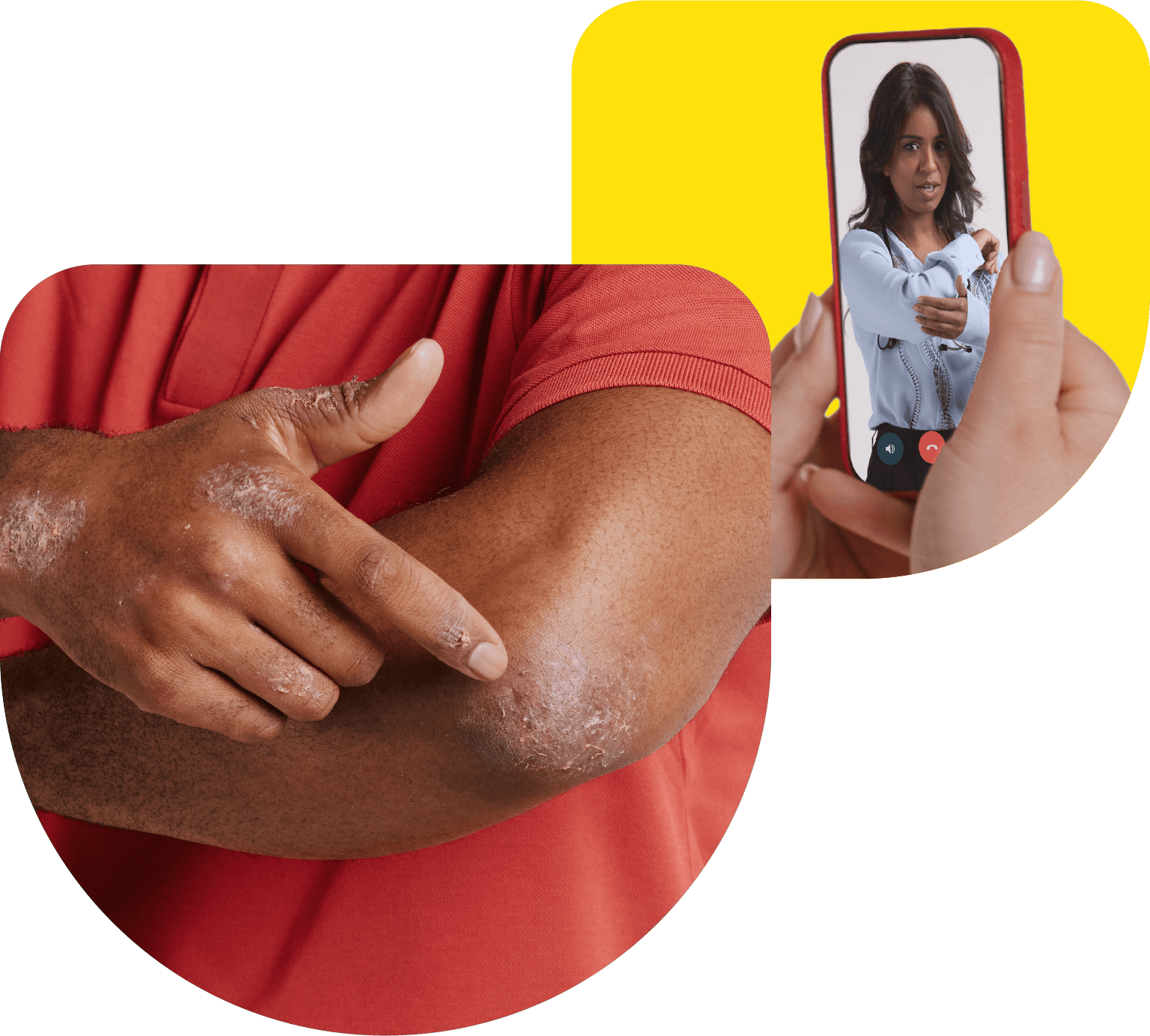


Secure and confidential

CQC-regulated prescribing

No appointment needed

Next-day delivery
Restore your confidence with healthier skin
We understand how much psoriasis can affect your day-to-day life and your confidence .
Our convenient and confidential service allows you to find a solution for your condition at a time that works for you.
Simply answer a few questions, and our clinicians will review your responses and prescribe a treatment if appropriate.
Your medication will then be discreetly delivered to your preferred address using Royal Mail.
How it works
Get started in 3 simple steps

Tell us about you

Explore treatment options

We'll dispense and deliver
Frequently asked questions
Psoriasis is a skin condition that mainly affects adults. The core symptoms of psoriasis are flaky, red patches covered with scales. These are known as ‘plaques’ and commonly appear on the scalp, knees, elbows and lower back, but can affect other areas of the body.
Psoriasis affects around 1 in 50 people, usually starting between the ages of 20 and 35. For some people, it’s a minor skin irritation, but others could experience more severe cases of cracking or bleeding. Around 30% of cases could lead to psoriatic arthritis, which makes joints stiff and painful.
There is no reason to suffer in silence. With the right treatments, you can understand your triggers and manage the symptoms to carry out your day-to-day without stress.
There’s ongoing research into the causes of psoriasis, but it’s thought to be hereditary and linked to our immune systems. Our skin cells generally regenerate every three to four weeks, but this is sped up to every three to seven days in people with psoriasis.
This leads to a build-up of excess skin cells which causes the plaques. The immune system attacks healthy skin cells and leaves pink and red patches or scales.
Many people find they have triggers that make their psoriasis symptoms worse, such as:
too much stress
alcohol and smoking
skin damage from sunburn, cuts or insect bites
hormonal changes, particularly during puberty or the menopause
You may also find symptoms are more severe if you’re feeling run down, for example, if you have a throat infection. If you’re taking medications such as lithium, anti-malaria treatments, anti-inflammatories, ACE inhibitors or beta-blockers, your symptoms may get worse.
Psoriasis is not contagious, but there is no cure. Instead, it’s important to know your triggers and use the right prescribed treatment to manage the symptoms.
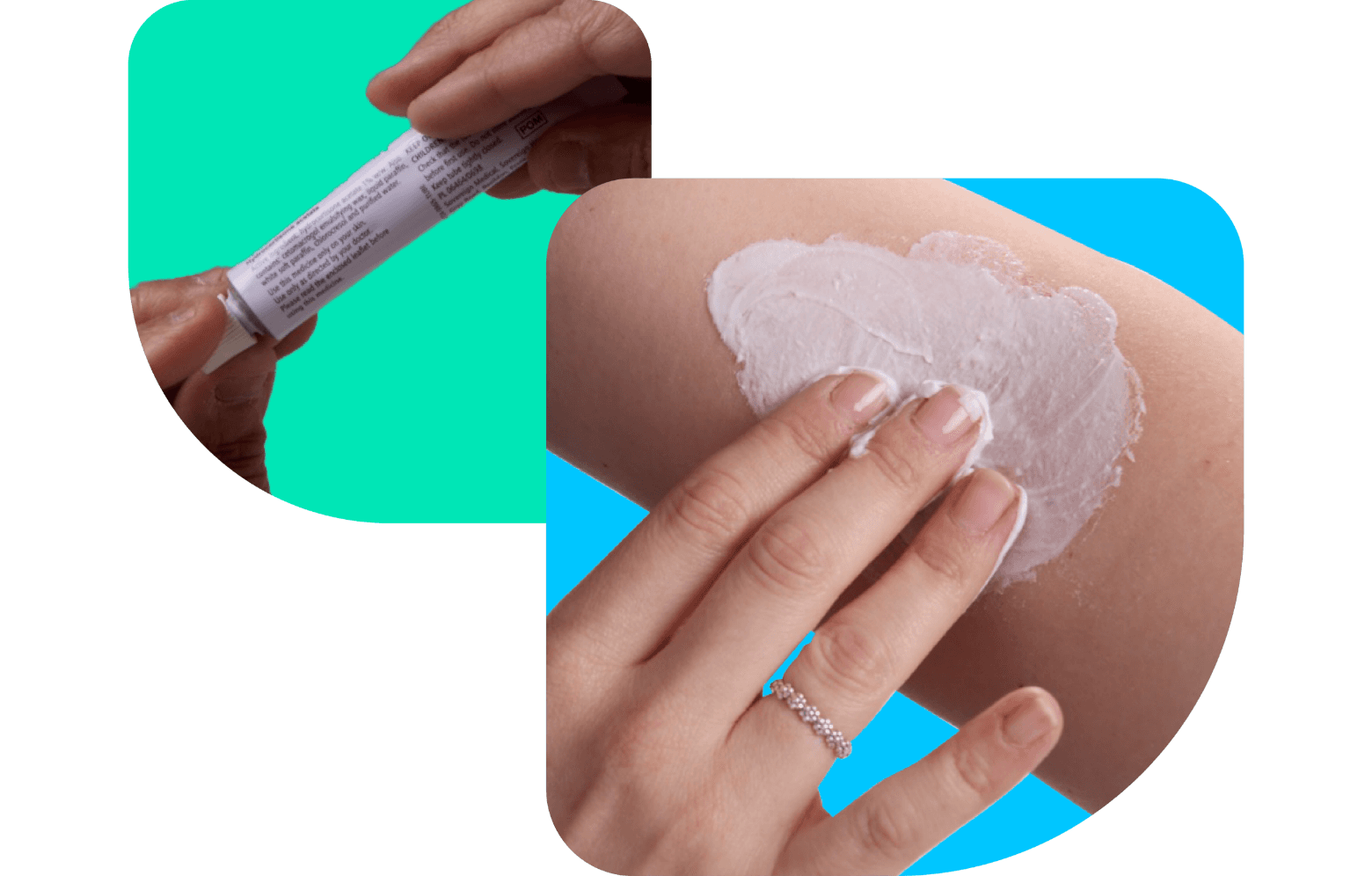
The best treatment for psoriasis will depend on your symptoms. If yours is a mild to moderate case, you can use topical treatments, such as moisturising creams and emollients, to hydrate the skin. You can also add oils to your bathwater or use coal tar-based products, though it’s important to check with your GP first.
In our questionnaire, we’ll ask you how severe your symptoms are and how they’re affecting your day-to-day life. If yours are more severe, we can offer prescription medication including:
steroids such as Betnovate, Eumovate and Diprosone
ointments such as Dovonex – these contain calcipotriol, which is linked to vitamin D and slows down skin cell regeneration
Dovobet – this contains steroids and calcipotriol for a dual-action treatment
Your GP may recommend other treatments such as phototherapy (UV light treatment). Our in-house GPs will listen to your symptoms and check back within two weeks to see how you’re getting on.
Meet our clinical team
Meet our dedicated team of clinicians bringing Online Doctor to life. With their experience and expertise,
they're helping to transform the way we access healthcare.

Dr Chris Morris
MBBS FRCGP DRCOG

Dr Caroline Pilot
MBBS MRCP MRCGP DFSRH DPD

Dr Amina Hersi
MBBS BSC MRCGP DRCOG

Dr Ramit Prashar
MBBS MRCGP BSC
What our patients say


Rated excellent with 400,000+ reviews as of October 2023
Worry free service
This service has taken all the worry out of ordering repeat perscriptions. They remind you when perscriptions are due & they are posted & within a couple of days they are there on your door mat. Exemplary service. Thank you.
Hester Pendino

Great service
Great service. With good liaison with my GP. And order always efficiently delivered. So much easier than queueing at the local chemist. I started using Pharmacy2U during the pandemic and no turning back.
Hilary Simpson
The help line staff were excellent
The help line staff were excellent, they understood my issue straightaway, told me they would need to speak to a line manager and would get back to me. The same person got back to me later in the day with an answer, issue resolved
Linda Lauren

Great user friendly service
This is a very easy service to use.
I order my medication online from the drs it goes straight through to Pharmacy2U they confirm they have received it and it is sent out for delivery. With emails keeping me informed of its status all along the way.Neil Etheridge
I get reminders when I need to order
I get reminders when I need to order. It is easy to order and I get updates to let me know how my order is progressing. Within a very short time it is put out for delivery. It is then up to Royal Mail to post it through my letterbox.
Janet Tittensor
Losing the monthly stress
Being able to request my prescription from the doctors and knowing that the items I require will be delivered to my door without delay. Originally I would go to the pharmacy after a 5 day wait to find that my prescription was not ready, so thank you for making my life easier.
Pat Cruttenden
Excellent service
Excellent service. Timely as ever. Prompted by P2U to re-order. From sending order to receipt was 7 days. Excellent as it includes GP’s approval sign off.
Ceijag